
Active meditations facilitates passive meditations. These techniques leads the meditator to experience themselves as that invisible, intangible Watcher on the Hill.
“Be more meditative. Whenever you have any opportunity, any space, any time, just allow things to happen around you. Look deeply, attentively, but don't be active -- because activity means thinking. Sitting quietly, allowing things to happen, you will become silent. Then you will come to know that silence is not a quality of the mind. Mind cannot be made silent. Silence is the quality of your inner soul, of your inner being. It is always there but because of the chattering, the constant chattering of the mind, you cannot hear it. Whenever you become passive, non-thinking, you become aware of it. Then you are unoccupied. In that unoccupied moment, meditation happens.”
- OSHO
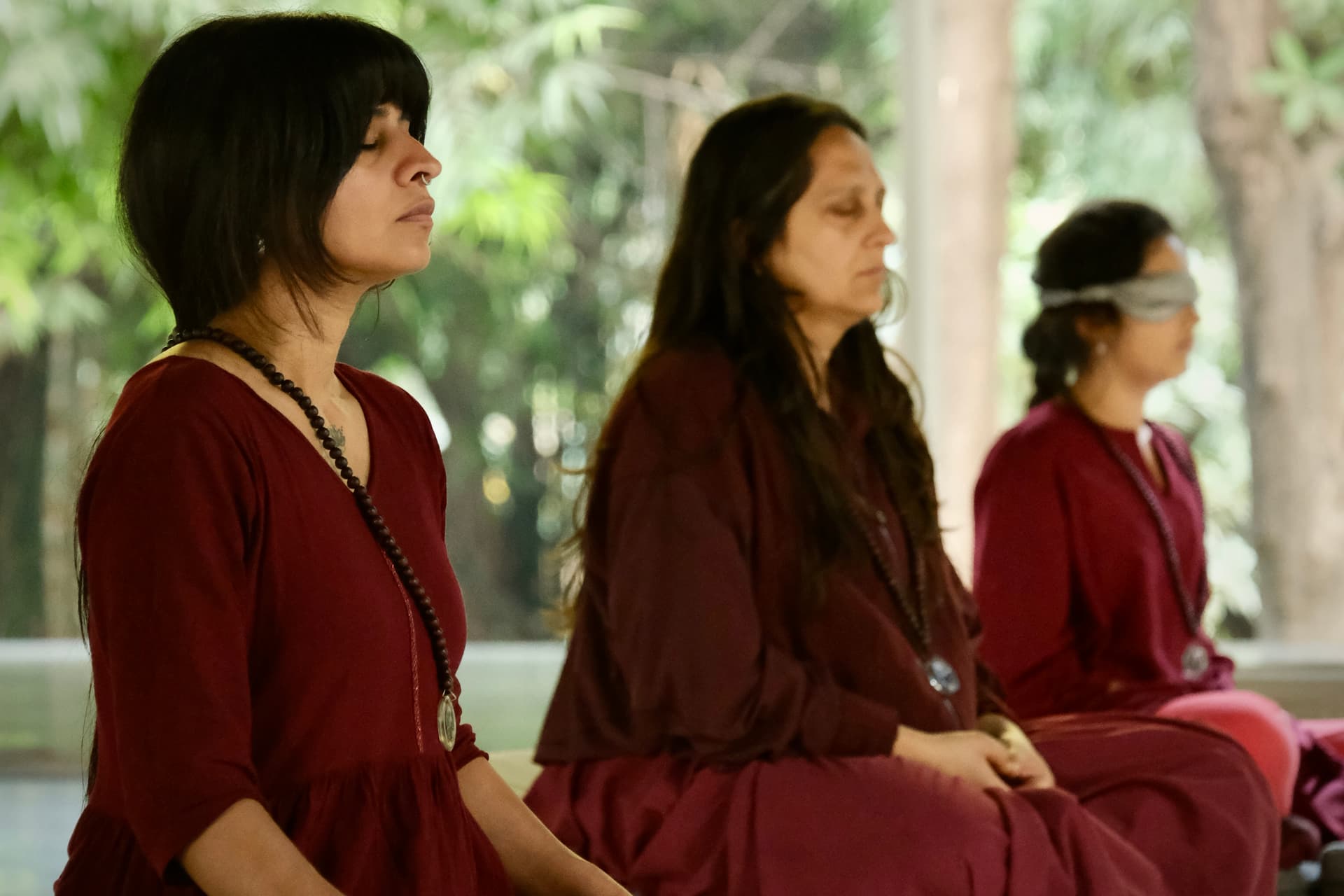
“Vipassana simply means watching your breath, looking at your breath. It is not like YOGA PRANAYAMA: it is not changing your breath to a certain rhythm -- deep breathing, fast breathing. No, it does not change your breathing at all; it has nothing to do with the breathing. Breathing has only to be used as a device to watch because it is a constant phenomenon in you. You can simply watch it, and it is the most subtle phenomenon. If you can watch your breath then it will be easy for you to watch your thoughts.”
- OSHO
First Stage: Sitting for 40 minutes. Find a reasonably comfortable and alert position to sit for 40 to 60 minutes. Back and head should be straight, eyes closed and breathing normal. Stay as still as possible, only changing position if it is really necessary.
While sitting, the primary object is to be watching the rise and fall of the belly, slightly above the navel, caused by breathing in and out. It is not a concentration technique, so while watching the breath, many other things will take your attention away. Nothing is a distraction in Vipassana, so when something else comes up, stop watching the breath, pay attention to whatever is happening until it’s possible to go back to your breath. This may include thoughts, feelings, judgments, body sensations, impressions from the outside world, etc. It is the process of watching that is significant, not so much what you are watching, so remember not to become identified with whatever comes up; questions or problems may just be seen as mysteries to be enjoyed!
Second Stage: Vipassana Walk for 20 minutes. This is a slow, ordinary walk based on the awareness of the feet touching the ground. You can walk in a circle or a line of 10 to 15 steps going back and forth, inside or out of doors. Eyes should be lowered on the ground a few steps ahead. While walking, the attention should go to the contact of each foot as it touches the ground. If other things arise, stop paying attention to the feet, notice what else took your attention and then return to the feet. It is the same technique as in sitting – but watching a different primary object. You can walk for 20 to 30 minutes.
“Vipassana is so simple that you don't take any note of it. In fact, coming across Vipassana for the first time, one doubts whether it can be called a meditation at all. What is it? -- no physical exercise, no breathing exercise; a very simple phenomenon: just watching your breath coming in, going out... finished, this is the method; sitting silently, watching your breath coming in, going out; not losing track, that's all. Not that you have to change your breathing -- it is not pranayam; it is not a breathing exercise where you have to take deep breaths, exhale, inhale, no. Let the breathing be simple, as it is. You just have to bring one new quality to it: awareness.
The breath goes out, watch; the breath comes in, watch. You will become aware: the breath touching your nostrils at one point, you will become aware. You can concentrate there: the breath comes in, you feel the touch of the breath on the nostrils; then it goes out, you feel the touch again. Remain there at the tip of the nose. It is not that you have to concentrate at the tip of the nose; you have just to be alert, aware, watchful. It is not concentration. Don't miss, just go on remembering. In the beginning you will miss again and again; then bring yourself back if it is difficult for you -- for a few people it is difficult to watch it there -- then they can watch the breath in the belly. When the breath goes in, the belly goes up; when the breath goes out, the belly goes in. You go on watching your belly. If you have a really good belly, it will help.”
“You can watch either at the belly or at the nose, whichever feels right for you or whichever feels easier for you. That it be easier is the point. And just watching the breath, miracles happen.”
“Vipassana comes in the end; you cannot begin with Vipassana. To begin with Vipassana you will have to go through what you are saying -- the dark night of the soul. And you will not find the dawn anywhere. The dark night will go on becoming longer and darker. It is a simple psychology: you are not prepared, you have not done your homework, and you have started a work which needs a tremendous background of experience.”
“We have so many meditations here, but I have put Vipassana at the very end. First go through all other kinds of experiences, purifying, so that you can become capable of entering Vipassana. People want to jump into paradise directly, and they don't see the place where they are standing, that if they jump from there they will have multiple fractures. One has to reach to the steps and one has to move step by step, consciously, cautiously. It is a pilgrimage.”
- OSHO

“How can we create the innerness within ourselves? Buddha invented a method, one of the most powerful methods, for creating inner sun of awareness. And not only for creating it: the method is such that it not only creates this inner awareness but simultaneously allows the awareness to penetrate to the very cells of the body, to the whole of one’s being. The method that Buddha used is known as Anapana-Sati Yoga of incoming and outgoing breath awareness. This is a guided meditation by Osho (Please refer to Osho’s audio discourse on this meditation) and it lasts for 45 minutes. Preferred time for this meditation is early morning and at night while going to sleep. One can sit in a lotus posture but for night just lie down in your bed and go into sleep doing it.”
- OSHO
First Stage: Deep and relaxed breathing for 10 minutes. The breath comes in: move with the breath; know, be aware, that the breath is moving in. When the breath has gone out again, move with it. Be in, be out, with the breath. Don't allow any breath to be in or out without consciousness. This is a meditation. Now you will be focused on breathing, and when you are focused on breathing thoughts stop automatically. You cannot think, because the moment you think your consciousness moves from breath to thought. You have missed breathing.
Second Stage: Continue the first stage along with the acceptance of all kinds of sounds from the surroundings for 10 minutes. You have to continue the first stage i.e. breathing with awareness, added to that is “the listening to sound without any resistance on our part”. Just be at ease with your surrounding. Hear all the sounds coming from all the directions with total acceptance and gratitude towards existence e.g. chirping of birds, wind passing through the trees, children making noise, traffic noise anything whatsoever. We are not to feel that this sound is disturbing me.
Third Stage: Continue the first two stages and add to that the feeling of your being non existent. You have to continue breathing with awareness with the acceptance of all kinds of sounds in the surroundings and one more deep feeling to be added is that you are no more. Just Like a drop of water dissolves into ocean; you have to feel that you have fallen into the infinite ocean of existence and dissolved into it. Feel that you are no more and existence is.
All the stages have been explained more elaborately in Osho’s voice in the Hindi audio discourse for Anapana-Sati Yoga Meditation.
“To be conscious of the breath means that no thoughts can be allowed, because thoughts will distract your attention. Buddha never says, "Stop thinking." He says, "Breathe consciously." Automatically, thinking will stop; you cannot both think and breathe consciously. When a thought comes into your mind, your attention is withdrawn from the breathing. A single thought and you have become unconscious of the breathing process.”
- OSHO
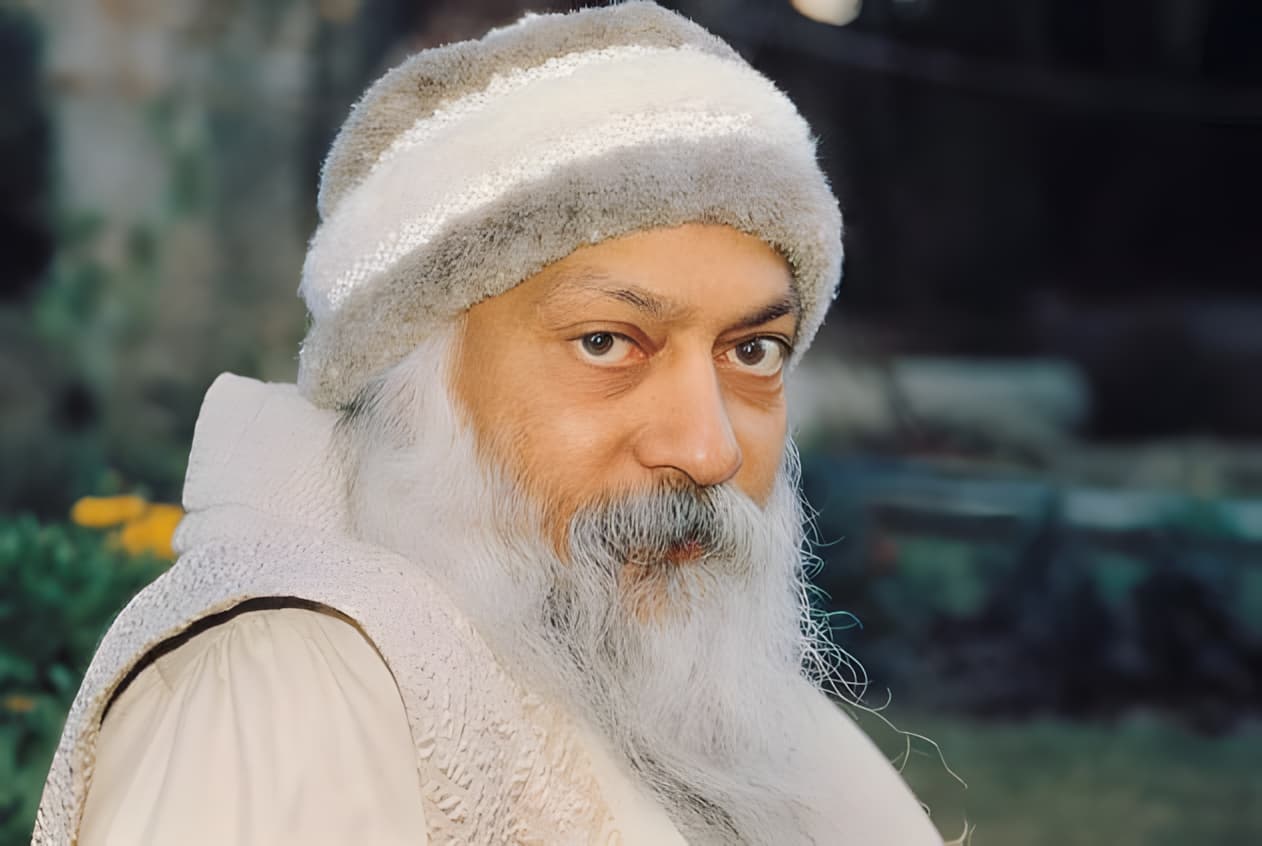
Meditation means surrender, total letting go. As soon as someone surrenders himself he finds himself in the hands of divinity. If we cling to ourselves we cannot be one with the almighty. When the waves disappear, they become the ocean itself. Let us try some experiments in order to understand what is meant by meditation.Sit in such a way that no one touches you. Close your eyes slowly, and keep your body loose. Relax completely so that there is no strain, no tension in the body at all.
First Stage: Now imagine that a river is flowing very fast, with tremendous force and sound, between two mountains. Observe it and dive in... but do not swim. Let your body float without any movement. Now you are moving with the river -- just floating. There is nowhere to reach, no destination, so there is no question of swimming. Feel as if a dry leaf is floating effortlessly in the river. Experience it clearly so that you can know what is meant by "surrender," by "total letting go."
Second Stage: If you have understood how to float, now discover how to die and how to be dissolved completely. Keep your eyes closed, let your body become loose and relax completely. Observe that a pyre is burning. There is a pile of woodsticks that have been set afire and the flames of the pyre seem to be reaching toward the sky. And remember one more thing: you are not just observing the burning pyre, you have been placed on it. All your friends and relatives are standing around.
It is better to experience this moment of death consciously, as one day or the other it is sure to come. With the flames growing higher and higher, feel that your body is burning. Within a short while the fire will be put out by itself. People will disperse and the cemetery will be empty and silent again. Feel it, and you will see that everything has become quiet and nothing but the ashes remains. You have dissolved completely. Remember this experience of being dissolved, because meditation is also a kind of death.
Keep your eyes closed now and relax completely. You do not have to do anything. There is no necessity to do anything: before you were, things were as they are, and they will be the same even after you die.
Third Stage: Now feel that whatever is happening is happening. Feel the "suchness" of it. It is so: it can only be this way; there is no other way possible, so why resist? By "suchness" is meant "no resistance." There is no expectation that anything be other than what is. The grass is green, the sky is blue, the waves of the ocean roar, birds sing, crows are crowing.... There is no resistance from you because life is such. Suddenly a transformation takes place. What was normally considered to be a disturbance now seems to be amiable. You are not against anything; you are happy with everything as it is.
So the first thing you had to do was to float, rather than swim, in the ocean of existence. For one who is ready to float, the river itself takes him to the ocean. If we do not resist, life itself takes us to the divinity.
Secondly, you had to dissolve yourself, rather than save yourself, from death. What we want to save is sure to die, and what is going to be there eternally will be there without our effort. The one who is ready to die is able to open his doors to welcome the divinity, but if you keep your doors closed -- because of the fear of death -- you do so at the cost of not attaining divinity. Meditation is to die.
The last thing you had to experience was "suchness." Only an acceptance of both the flowers and the thorns can bring you peace. Peace, after all, is the fruit of total acceptance. Peace will come only to him who is ready to accept even the absence of peace.
So close your eyes, let your body be loose, and feel as if there is no life in the body. Feel as if your body is relaxing. Go on feeling this, and within a short time you will know that you are not the master of the body. Every cell, every nerve of the body will feel relaxed -- as if the body does not exist. Leave the body alone as if it is floating on the river. Let the river of life take you anywhere it wants to, and float upon it just like a dry leaf. Now feel that your breath is gradually becoming quiet, silent. As your breathing becomes silent, you will feel that you are being dissolved. You will feel as if you are on the burning pyre, and you have been burnt completely. Not even ashes have remained. Now feel the sound of the birds, the sun's rays, the waves of the ocean, and just be a witness to them -- receptive and yet aware, watchful. The body is relaxed, breathing is silent, and you are in "suchness"; you are just a witness to all this.
Gradually you will feel a transformation within, and then suddenly something will become silent inside. The mind has become silent and empty. Feel this: be a witness to it, and experience it. The river has taken away your floating body, the pyre had burnt it, and you have been a witness to it. In this nothingness, a blissfulness enters which we call divinity. Breathe slowly two or three times now, and with each breath you will feel freshness, peace and a blissful pleasure. Now open your eyes slowly and come back from meditation.
Try to do this experiment nightly before going to bed and go to sleep right afterward. Gradually, your sleep will turn into meditation.
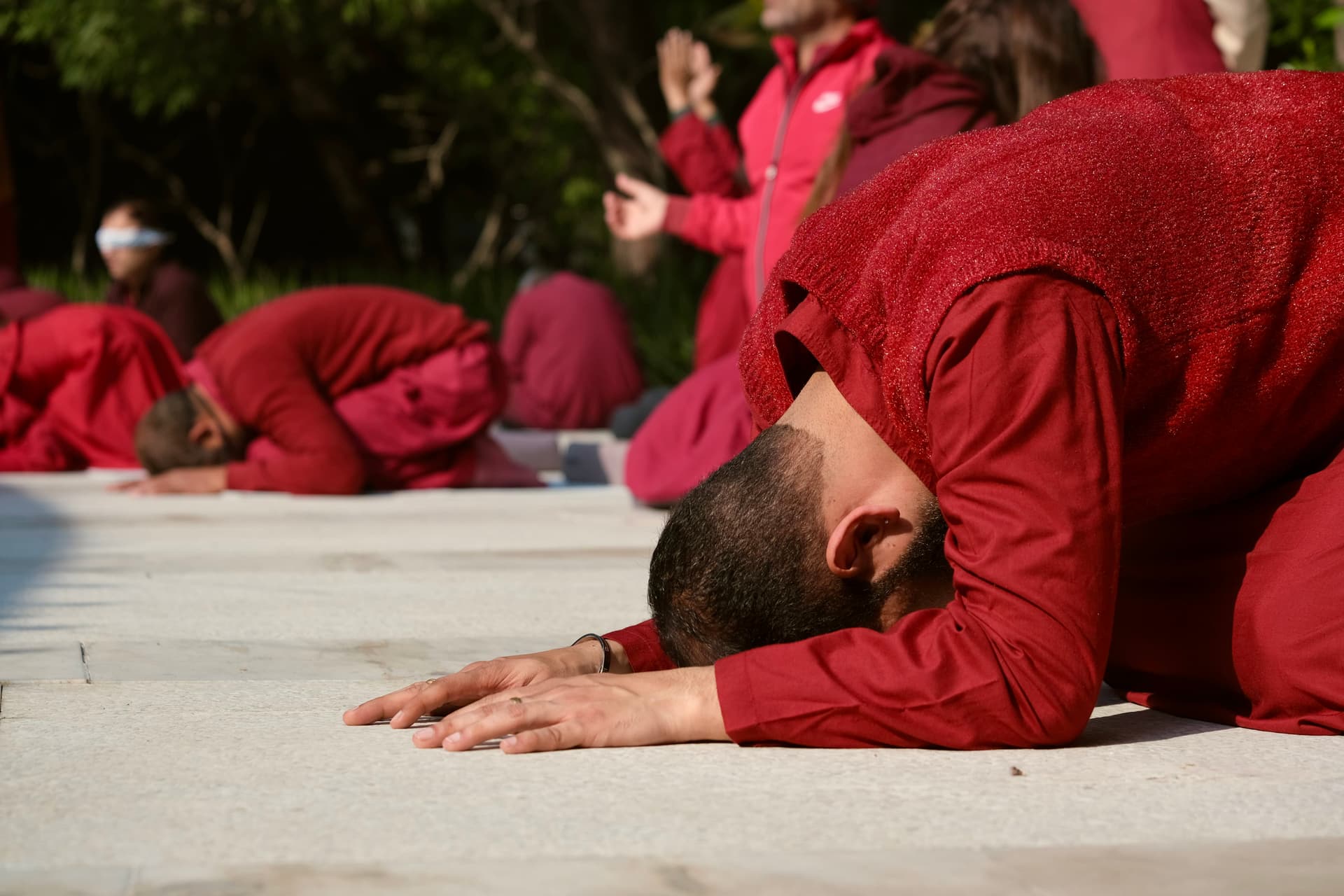
This technique is best to be done at night in darkened room, going to sleep immediately afterwards or it can be done in the morning but it must be followed by 15 minutes rest otherwise you will feel as if you are drunk, in a stupor. This merging with energy is prayer. It changes you & when you change the whole existence changes.
First stage: Raise both your hands towards the sky, palms uppermost, head up, just feeling existence flowing in you. As the energy or prana flows down your arms you will feel a gentle tremor – be like a leaf in the breeze, trembling. Allow it, help it. Then let your whole body vibrate with energy and just let whatever happens happen.
Second stage: After two or three minutes, or whenever you feel completely filled, lean down to the earth and kiss it. You simply become a vehicle to allow the divine energy to unite with that of the earth.
These two stages should be repeated six more times so that each of the charkas can become unblocked. More times can be done but if you do it less you will feel restless and unable to sleep.
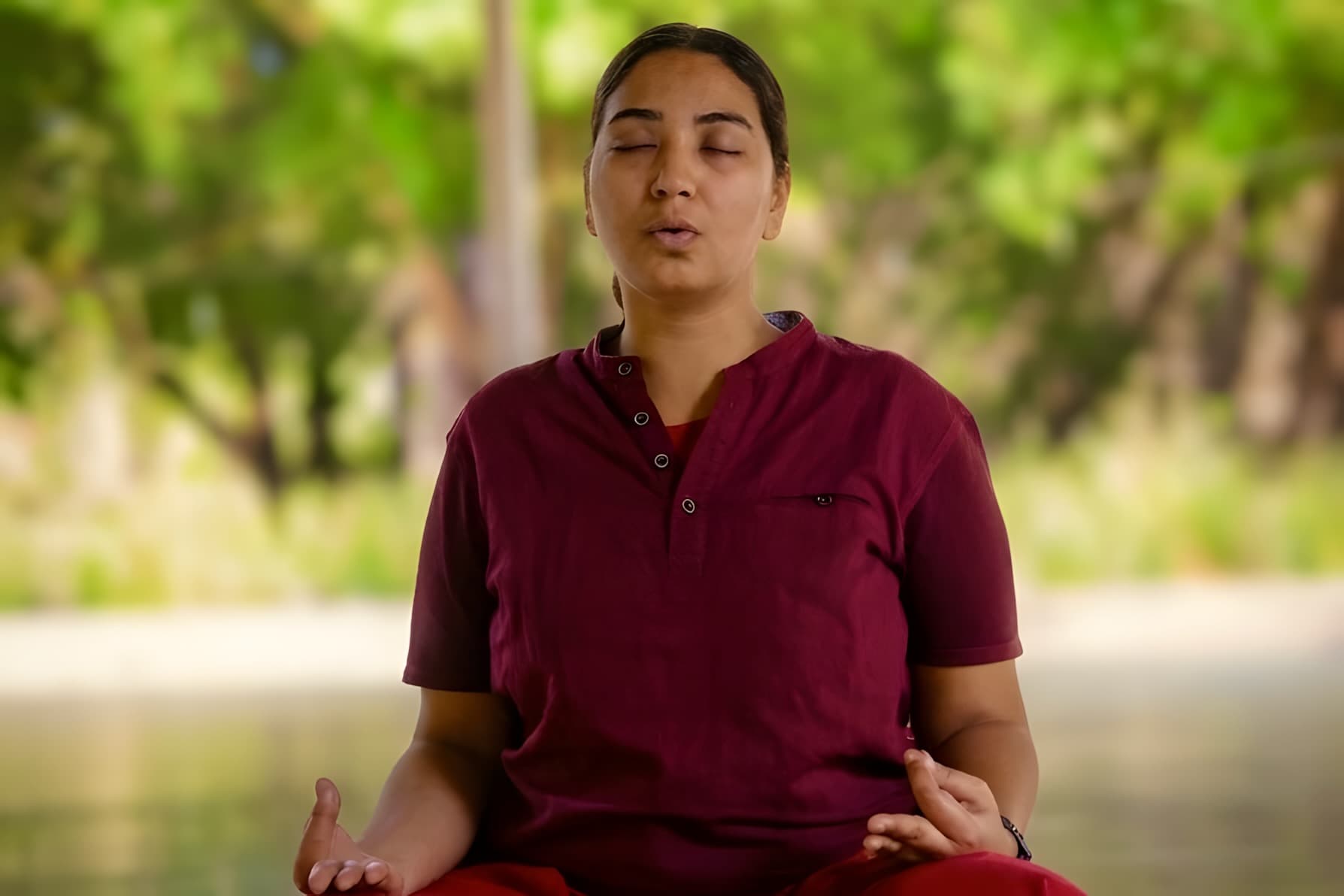
“AUM represents the music of existence, the soundless sound, the sound of silence, when your whole being hums with joy. Aum represents the ultimate harmony, what Heraclitus calls "the hidden harmony". To become one with this music of existence is to attain flowering, fulfillment.
The moment you lose your discord with the whole, the moment you are in tune with the whole -- attunement simply means "at-onement" -- when you are one with the whole, every fiber of your being, every cell of your being dances, for no reason at all. It is the dance for dance's sake, joy which is uncaused, hence it is eternal -- joy which is unmotivated, joy which is not dependent on anything. It is your intrinsic, natural music, your spontaneity.”
“AUM is not a word, it is pure sound. All other words have arisen out of it, but it itself is not a word. It is the source of all sounds; it cannot have any meaning whatsoever.
This sound AUM consists of three sounds: A, U, M. these are the seed sounds; all other sounds are created by A, U, M. All our words, the whole alphabet, is created by these three seed sounds: A, U, M. AUM is the source of all these three.”
- OSHO
AUM has no meaning, no form, it’s a pure sound consisting of three sounds A, U and M indicating sounds of the head, the heart and the navel. This is the formula, one has to go from ‘A’ to ‘U’ and from ‘U’ to ‘M’. That which kills the mind is mantra and AUM is the most powerful mantra. For this technique a closed room, preferable small and empty, is ideal.
First stage: 10 minutes. Sit quietly, but before that get rid of all the body's restlessness by dancing, jumping, skipping, running for about ten minutes. Then sit silently, keeping the eyes half-closed to the world and half-opened to your inwardness.
Second stage: 10 minutes. Eyes remaining half-closed and observing the tip of the nose, repeat AUM as loudly as possible using your full strength, making the body bathed in the vibrations of AUM. Repeat AUM so quickly that each repetition overlaps the previous one, leaving no gap between them, so that the mind has no chance to intrude.
Third stage: 10 minutes. Close your eyes. Close the mouth with tongue touching the roof of the mouth, repeat AUM inside the mind silently, keeping the same speed as before so as to fill the body with “omkar”, leaving it trembling with vibrations from head to toe.
Fourth stage: Drop your chin on to your chest, as if the head is cut off, lifeless and try to listen to the AUM resonating within. Become the witness. If you listen very silently you are bound to hear a very subtle sounding not AUM but exactly like it. Maintain this stage for as long as possible.
Fifth Stage: And in the fifth stage you simply forget about everything: the doer, and the hearer, and the sound -- everything. In the fifth stage there is nothing. Just remaining silent, not trying to make any sound or hear any sound. Just remain silent.
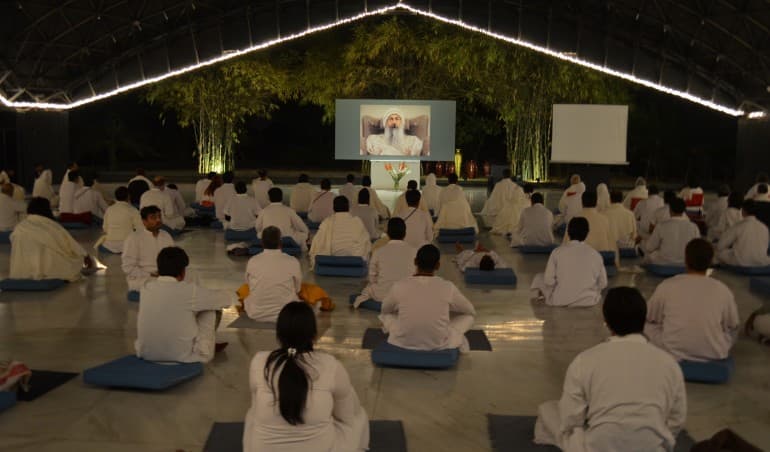
This meditation has three parts. The first is the relaxation of the body. The second is the relaxation of the breath. And the third is the relaxation of thoughts. One has to let go of all three.
First, sit with a little space between one another. It is possible that someone may fall during the meditation, so leave some distance. Move a little backward or forward if needed.
Yes, keep some space between each other. No one should be touching anyone else. Otherwise, you will remain occupied with holding yourself upright so that you do not fall onto someone, or someone does not fall onto you. And if someone does fall on another person, it becomes a disturbance for both.
When the body is completely relaxed, there is no certainty—it may fall forward or backward. As long as you are holding it, there is control. But the moment you stop holding it, the body may collapse. When your inner grip is released, who is left to support the body? It may naturally fall.
If you have to spend energy preventing the body from falling, your attention will remain there, and you will not be able to move inward. Therefore, if the body falls, consider it a blessing. Let it fall completely. Do not try to stop it. If you try to control it, your meditation will stop at that point and you will not be able to go deeper.
And if someone happens to fall against you, do not be disturbed. If they fall, let them fall. If their head rests in your lap for a while, there is no problem. Let it remain there.
Now, the first thing: close your eyes... close your eyes... close your eyes. Do not speak to anyone. Just close your eyes.
Relax the body... Let the body become completely loose, as though there is no life left in it. Withdraw all your energy inward. Take all your energy away from the body and bring it within. As the energy moves inward, the body will become more and more relaxed.
Now I suggest that you feel that the body is relaxing... Experience it. And the more deeply you experience it, the more relaxed it will become. It will relax... relax... relax... until it lies like a lifeless body. It may bend, it may fall—whatever happens, let it happen. Simply let go.
Feel it... The body is relaxing... the body is relaxing... the body is relaxing... Let go completely. Withdraw within yourself. Just as a person walks inside their own home, move inward within yourself. Step back from the body. Withdraw into your own being.
The body is relaxing... the body is relaxing... the body is relaxing... the body is relaxing... Let it go completely. Let it become utterly lifeless, as if no life remains in it.
The body has become relaxed... the body has become relaxed... the body has become relaxed... the body has become relaxed... the body has become relaxed... the body has become relaxed... the body has become completely relaxed.
Now I assume that you have let go completely—that every grip has been released. If the body falls, let it fall. If it leans forward, let it lean. Whatever happens, let it happen. Do not hold on in any way. Look within and see that you no longer have any control over the body. You are no longer holding it. You have surrendered it completely.
The body has become relaxed... the body has become relaxed.
Now the breath is becoming calm... the breath is becoming calm. Feel it... The breath is becoming calm... the breath is becoming calm... the breath is becoming calm... the breath is growing quieter and quieter.
Let go completely. Release your hold on the breath as well.
The breath is becoming calm... the breath is becoming calm... the breath is becoming calm... the breath is becoming calm... the breath is becoming calm... the breath is becoming calm... the breath has now become completely calm.
The breath is calm.
Now thoughts are also becoming quiet. Feel it... Thoughts are becoming still... thoughts are becoming still... thoughts are becoming still... thoughts are becoming still... thoughts are becoming still... thoughts are becoming quieter and quieter.
Let go. You have let go of the body. You have let go of the breath. Now let go of the thoughts as well. Withdraw further inward. Move even behind the thoughts.
Everything has become silent... Everything has become silent... It is as if you have died. Everything outside has died. Everything is gone. Everything has become still.
Only awareness remains within—a single flame of consciousness continues to burn while everything else has disappeared.
Let go... let go completely... as if you no longer exist.
The body is as if dead... the body is no more. The breath has gone. The thoughts have gone. It is as though death has arrived.
Withdraw completely inward. Let everything go. Hold on to nothing. You have died.
Feel that everything has died... everything has died. Only one flame remains burning within, while everything else has vanished... everything has dissolved.
For the next ten minutes, disappear into the emptiness. Remain a witness. Simply observe this death. Everything around you has disappeared. The body has been left far behind. You have moved away from it.
Now just keep watching. Remain the observer. For ten minutes, simply look within.
(Silence... the sound of the ocean... birds singing... the rustling of the wind... the heartbeat... everything silent... everything still.)
(After remaining silent for a few minutes, Bhagwan Shri begins speaking again.)
Keep looking within. Everything outside will become lifeless. Let it all go... completely dead. Simply remain watching... remain only the witness.
Everything has been left behind, as though you have truly died. The body lies outside... still. The thoughts are still. Only one flame remains within, silently watching. Only the witness remains. Only awareness remains.
Let go... let go completely.
(Silence... stillness... vast emptiness.)
Allow whatever happens to happen. Let go completely. Simply continue watching within. Release every grip.
The mind has become silent and empty... The mind has become completely empty... The mind is silent and empty... The mind has become completely empty.
If there is even the slightest grip remaining, let that go as well. Disappear, as though you are no longer there.
The mind has become empty... The mind is silent and empty... The mind has become completely empty.
Look within with full awareness. Everything has become still. The body has been left far behind. The mind has been left far behind. Only one flame continues to burn—the flame of consciousness. Only pure light remains.
(Silence... solitude... stillness.)
Now slowly take two or three deep breaths. Continue watching the breath. With every breath, peace will deepen even more.
Slowly take two or three deep breaths while remaining aware within. Be the witness of each breath. The mind will become even more peaceful.
Slowly take two or three deep breaths...
Then, very slowly, open your eyes.
If someone has fallen during the meditation, first take a few deep breaths before trying to get up. If getting up feels difficult, do not hurry. If opening your eyes feels difficult, do not force it. First breathe deeply, then slowly open your eyes.
Rise very gently. Do nothing abruptly—neither getting up nor opening your eyes. Move with great care and ease.